What Happens When 1st Cousins Have a Baby
1st of their kind infant tyrannosaur fossils unearthed
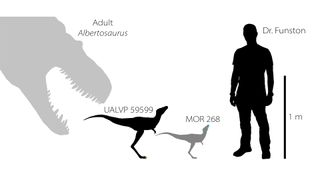
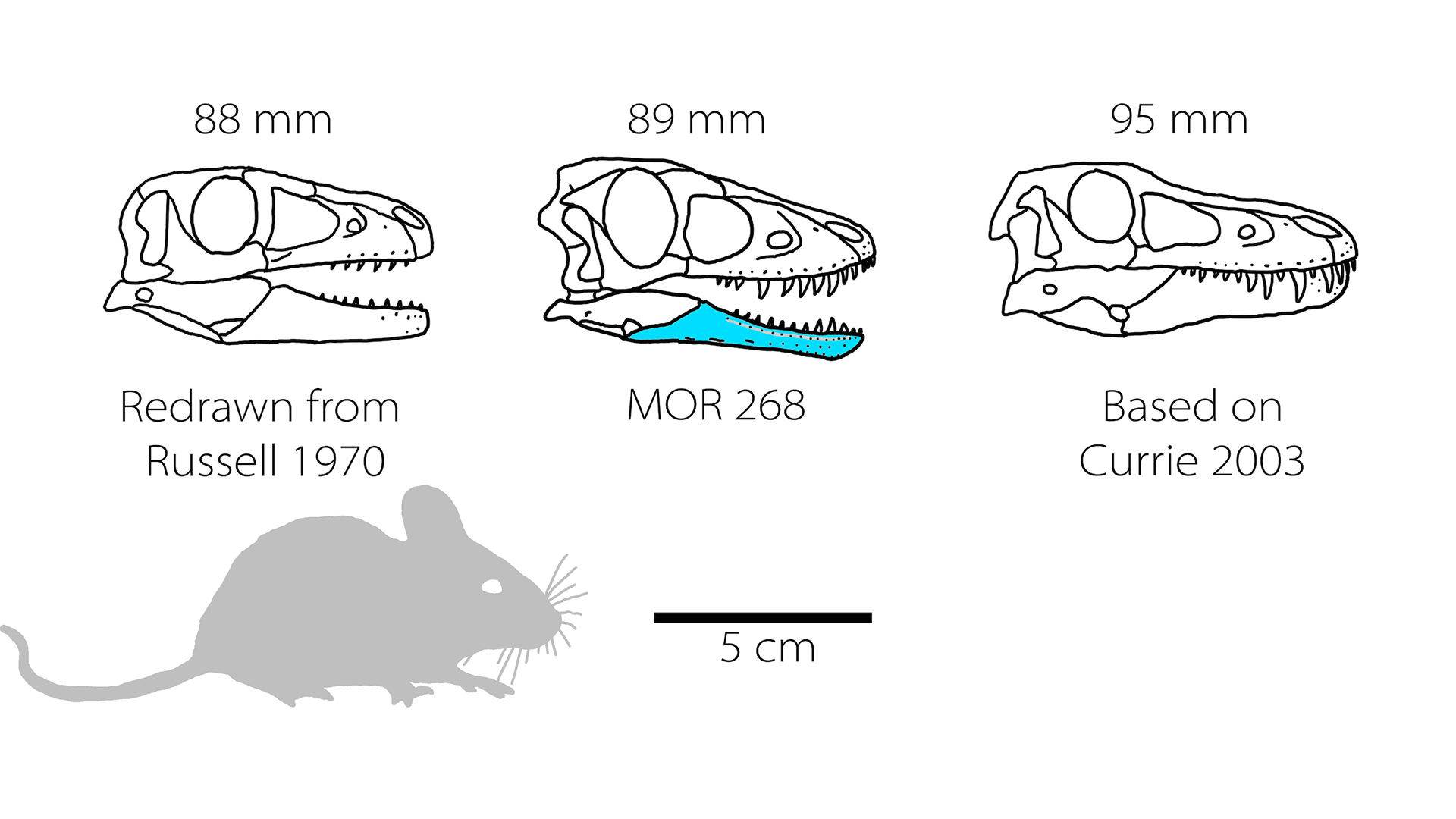
A fossil of what may be a tyrannosaur embryo shows that the gigantic apex predator started out with a skull the size of a mouse.
That conclusion came after the study authors found a toe claw from a baby tyrannosaur in Alberta, Canada in 2017 — which prompted them to analyze a previously known baby tyrannosaur jawbone, constitute in Montana in 1983. Considering the jawbone was too fragile to be removed from the surrounding rock, it had never been properly studied. But at present, an analysis of both fossils is revealing all kinds of secrets about these baby beasts.
"These are incredibly rare finds — the starting time of their kind in the world," pb researcher Gregory Funston, a paleontologist at the University of Edinburgh in Scotland, told Live Science in an electronic mail. "Juvenile tyrannosaurs of whatsoever kind are exceedingly rare, and we've never plant any bones that we suspected might be embryos, until now."
Related: Gory guts: Photos of a T. rex autopsy
The research, which is non yet published in a peer-reviewed journal, was presented online Tuesday (Oct. 13) at the Social club of Vertebrate Paleontology's annual conference, which is virtual this twelvemonth due to the COVID-19 pandemic.
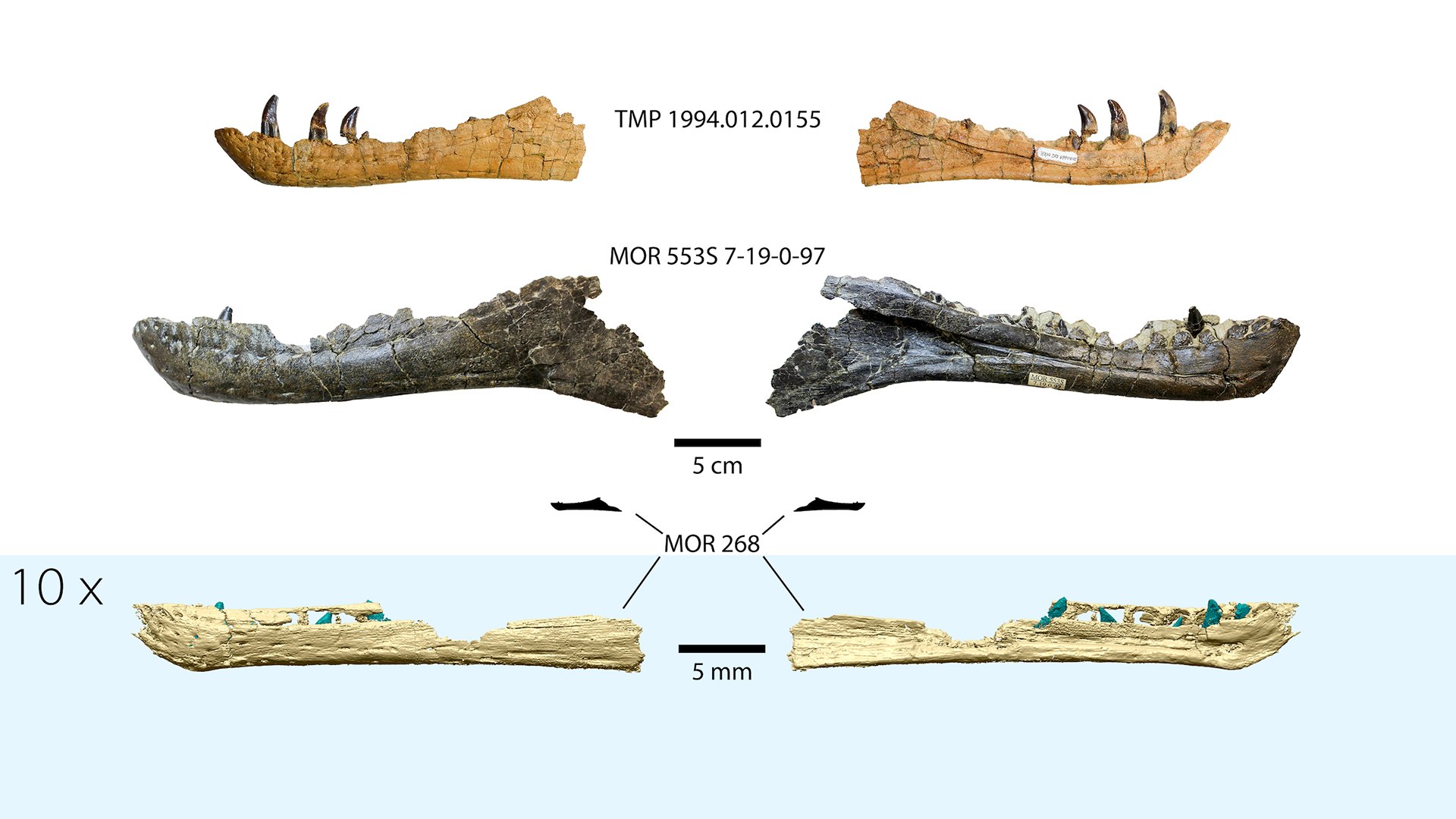
The teensy, ane.1-inch-long (two.9 centimeters) tyrannosaur jawbone still sports 8 little teeth. Considering it was stuck in the surrounding rock, the researchers scanned the jawbone with a particle accelerator, which let them paradigm the fossil without excavating it. Despite the jawbone's miniature size, "it looks surprisingly like other juvenile tyrannosaurid jaws," Funston said. "It has a deep groove on the within and a distinct chin, which are both features that distinguish tyrannosaurs from other meat-eating dinosaurs."
These features helped convince other paleontologists that the jawbone truly is from a tyrannosaur — "we can know that these features tin can be used to place tyrannosaurs no matter how young they are," Christopher Griffin, a postdoctoral acquaintance in the Section of Earth & Planetary Sciences at Yale University, who wasn't involved with the research but attended the presentation at the briefing, told Live Science.
The teeth on the jawbone aren't fully developed, and i tooth in particular offers clues that this fossil might vest to an embryonic tyrannosaur, pregnant the tiny tyrannosaur would accept died earlier it had hatched.
"In one of the molar sockets, a replacement molar is being developed, but in an unusual manner: Typically, replacement teeth lie directly below the older tooth, and they eat away at the root to release the older molar," Funston said. "In our example, the replacement tooth is beside the older tooth, and there'due south no evidence of root disintegration. This manner of replacement has recently been institute in the outset generation of teeth in reptile embryos."
(The toe-hook fossil might also be from an embryo because one surface wasn't fully formed, Funston noted.)
Embryonic mysteries
It'due south a mystery which genus of tyrannosaur these fossils are from, but a few well-known predators from this group include Tyrannosaurus rex , Gorgosaurus and Albertosaurus. But even without knowing the genus, "finding the remains of extremely young tyrannosaurs is very heady," said Kat Schroeder, a doctoral student of biological science at the Academy of New Mexico, who wasn't involved with the research just attended the conference presentation. Embryonic fossils are rare, she told Live Science in an email, because "fifty-fifty before they were born, dinosaurs would accept been nether threat of predation from egg-stealing mammals, and had this baby tyrannosaur hatched, it likely would have had to avert being eaten by dromaeosaurs ( Velociraptor -like dinosaurs), older tyrannosaurs, crocodilians and possibly fifty-fifty giant pterosaurs."
Related: Photos: Fossilized dino embryo is new oviraptorosaur species
More than is known about tyrannosaurs older than 2 years — for instance, for a study published in June in the periodical PeerJ, a paleontologist exhaustively analyzed T. rex'south growth from tiny tot to hulking adult. Other tyrannosaurs also accept extreme growth patterns, "hatching out not much heavier than a firm cat, and growing to the size of an elephant over 15 years or so," Schroeder said.
Funston noted that researchers have yet to find any tyrannosaur eggshells, so perhaps these dinosaur kings laid soft-shelled eggs, which don't fossilize well. This wouldn't be without precedent: Before this yr, two studies published in the periodical Nature offered evidence that the Triceratops-like dinosaur Protoceratops and the long-necked sauropodomorph Mussaurus likely laid soft-shelled eggs, as did the marine reptile Mosasaurus.
"Nosotros don't accept any direct show of these soft-shelled eggs withal, but these clues tell the states we should get-go looking," Funston said.
Editor's note: After its presentation at the October 2020 Society of Vertebrate Paleontology conference, this enquiry was published online January. 25, 2021 in the Canadian Periodical of Earth Sciences .
Originally published on Alive Science.
Source: https://www.livescience.com/baby-embryonic-tyrannosaur-fossils.html

Post a Comment for "What Happens When 1st Cousins Have a Baby"